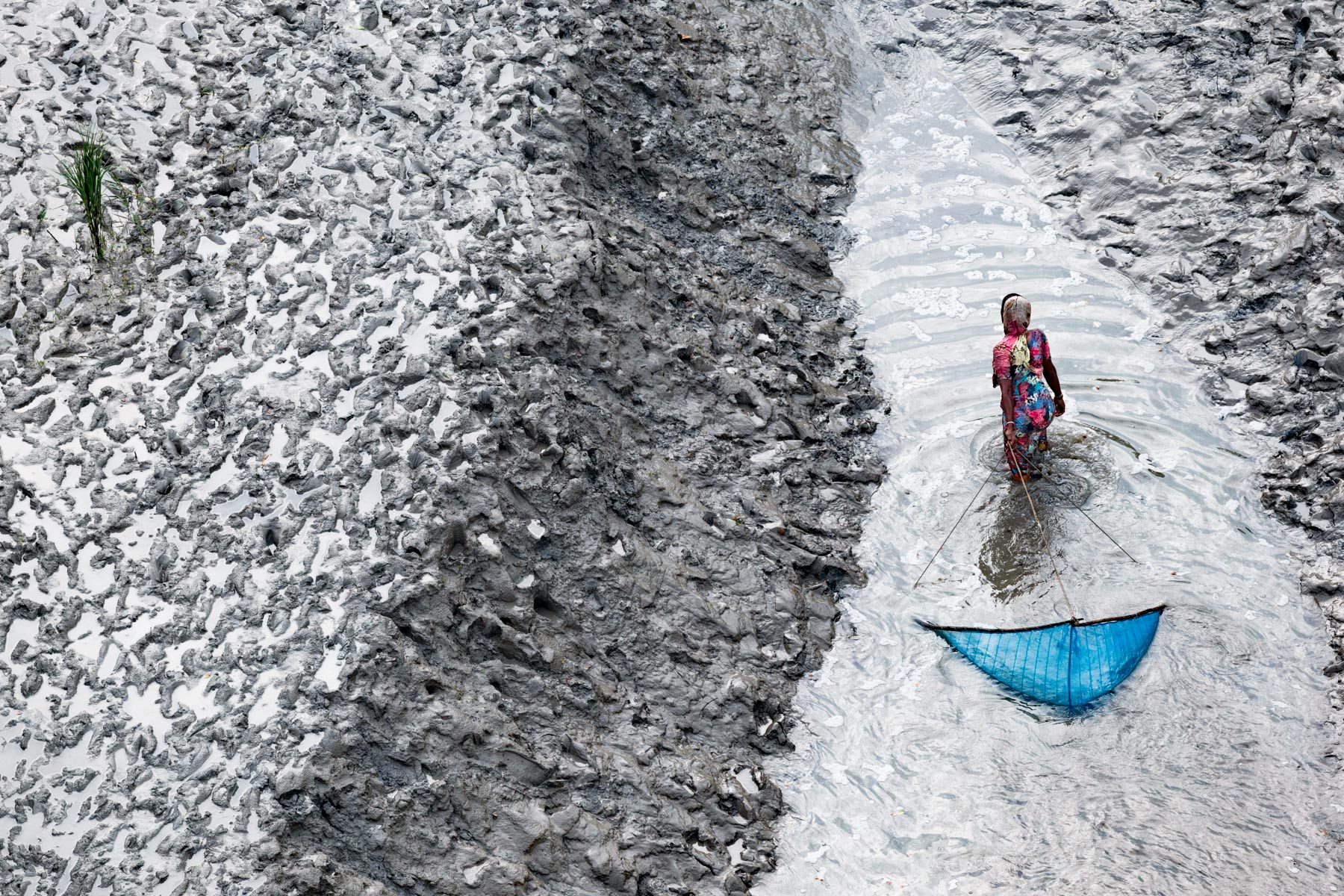
| At Marennes it is not sand but mud that the Atlantic Ocean washes over and then uncovers with each tide. In the nineteenth century, peasants, sailors, and shore dwellers found a way to supplement their income by intensively raising oysters, taking advantage of the disappearance of the salt pans driven out of business by Mexican imports. At the behest of Napoleon III, who wanted to establish a model of production in the converted basin, the shoreline between the high and low tide marks soon became a mosaic of claires, basins fed by both fresh and sea water. This way of breeding oysters between land and sea, originally unique to the Marennes area, became widespread. The oysters are fed by the rising and falling tides which bring a nutritious slime - a microscopic blue alga, Navicula ostrearia, whose pigment gives the oysters’ flesh its characteristic greenish color. People and nature collaborate so closely here that they end up living according to the same rhythm. In Marennes, people use the lunar calendar dictated by the tides, rather than the solar one used by agricultural civilizations since the dawn of time.
Visit the YAB Gallery for books and signed prints |