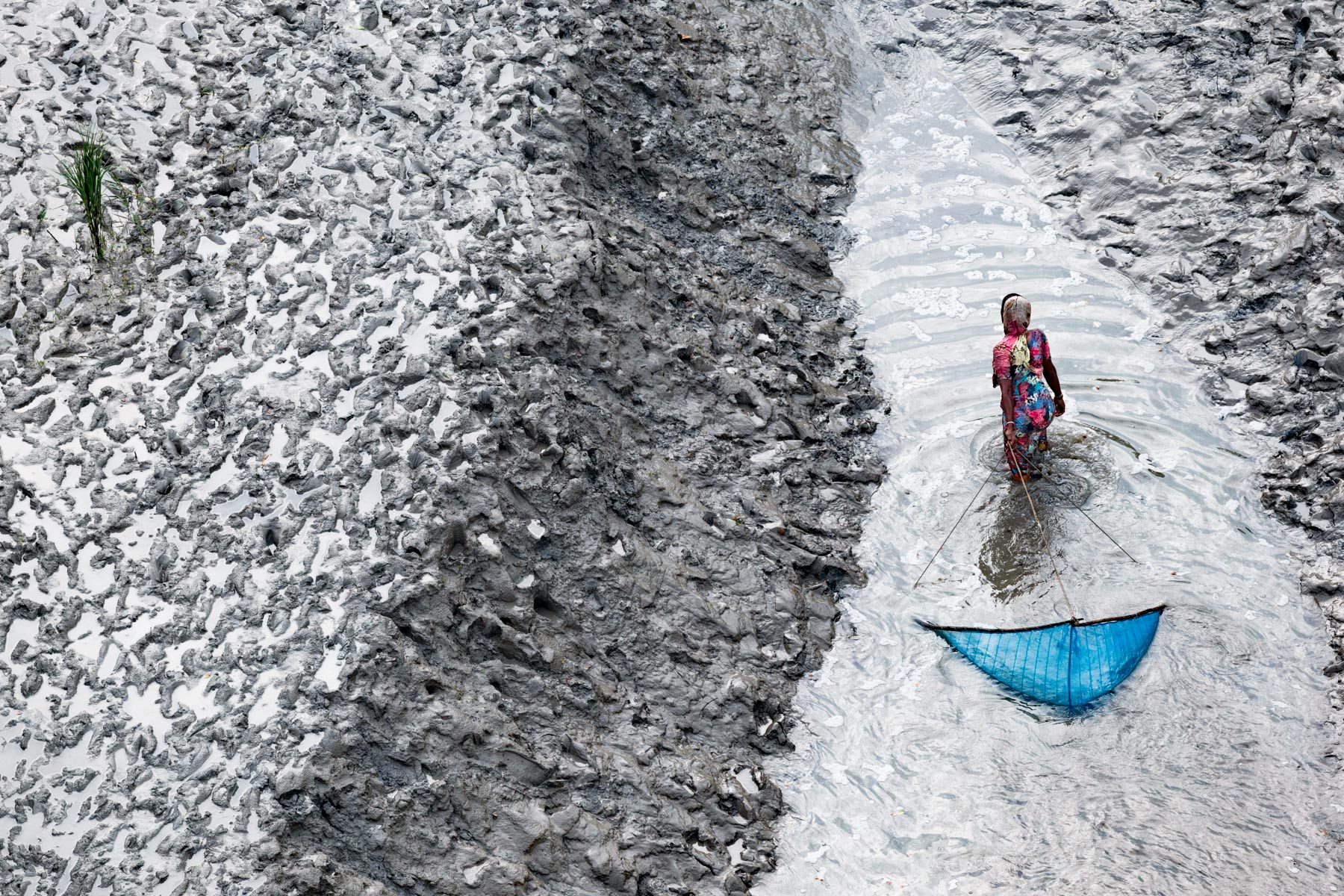
| These exposed mudflats hold in their grip the sailing boats left abandoned by the tide. The tides are the main agent in the Gulf of Morbihan’s geomorphology, constantly reshaping this inland sea, which is 12.4 miles long (20 km) and almost as wide. The cyclical variation in the level of the oceans is due to the gravitational pull of heavenly bodies. Since the moon is the nearest, it is chiefly responsible for moving vast masses of water. But when the moon and sun are in alignment, the phenomenon is greatly accentuated, producing extreme tidal movements. In the Gulf of Morbihan, tidal flows are slowed down by the second-biggest bed of sea wrack in France. This aquatic plant helps to feed the 130,000 or so birds that spend the winter here. This richness has led to the site’s listing under the Ramsar Convention, which covers wetlands of international importance.
Visit the YAB Gallery for books and signed prints |